Getting to the heart of what matters in the Sawtooth National Recreation Area
Don't Eat the Watermelon Snow!
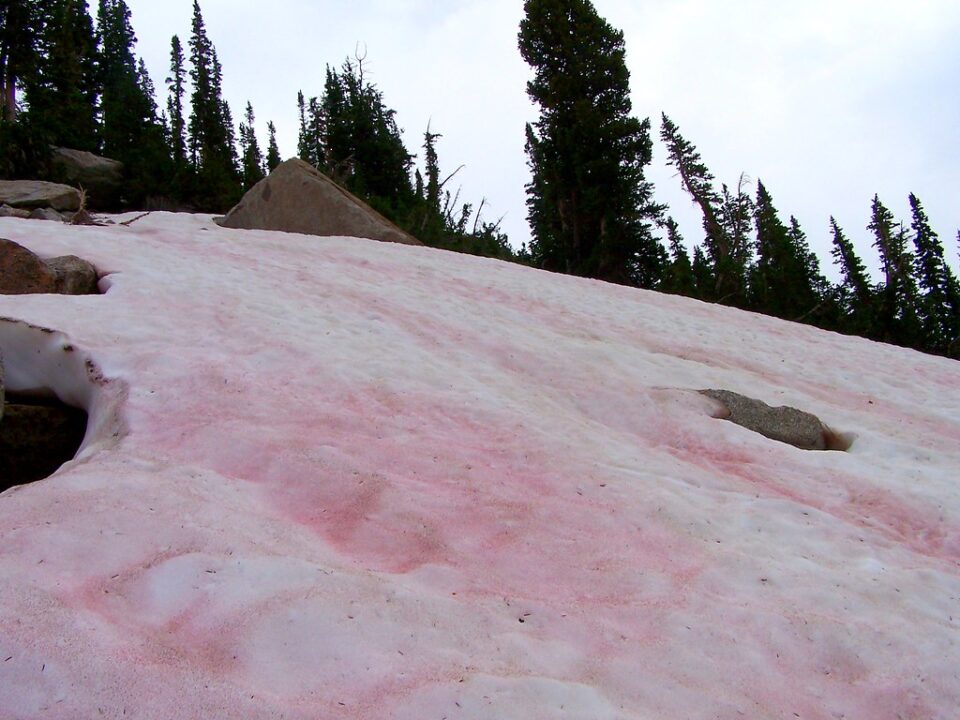
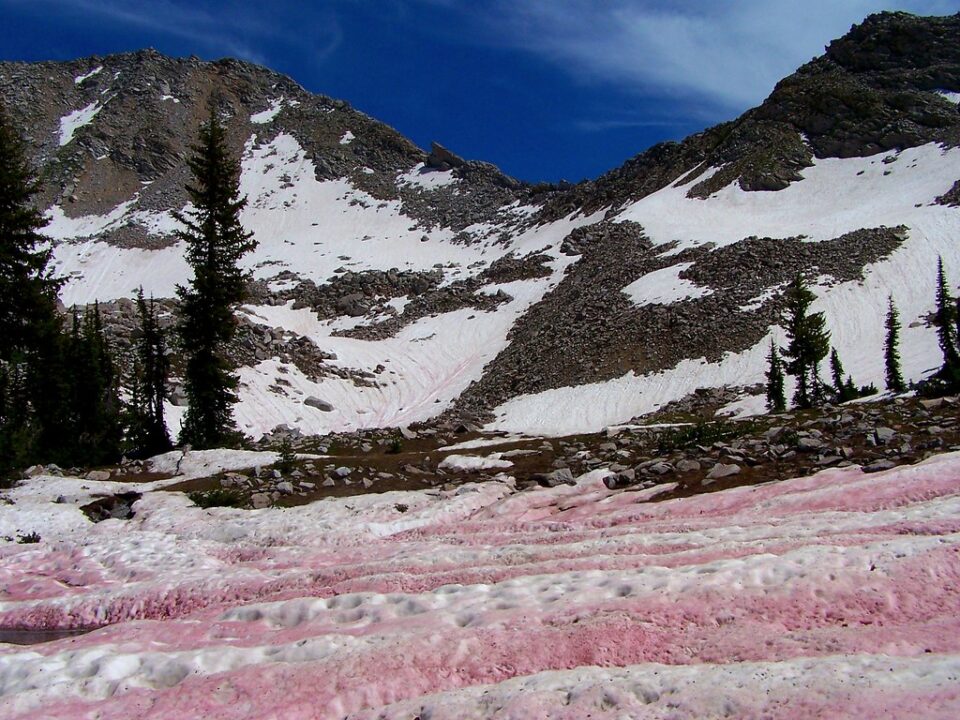
Watermelon snow may sound like a refreshing, summertime treat, but it is actually a super interesting phenomenon. Watermelon snow is characterized as red/pink snow commonly found during the summer months in high alpine environments between 10,000 and 12,000ft. But how does this happen? This unique coloring is caused by Chlamydomonas nivalis, or snow algae. Snow algae is cryophilic, meaning “snow loving”, which has led to some pretty unique adaptations. In addition to chlorophyll common to green algaes like this one, snow algae contains a secondary red pigment. The algae evolved this pigment to protect its cells from ultraviolet rays, as well as to absorb heat. This melts the snow around the algae and provides it with an ample water source.
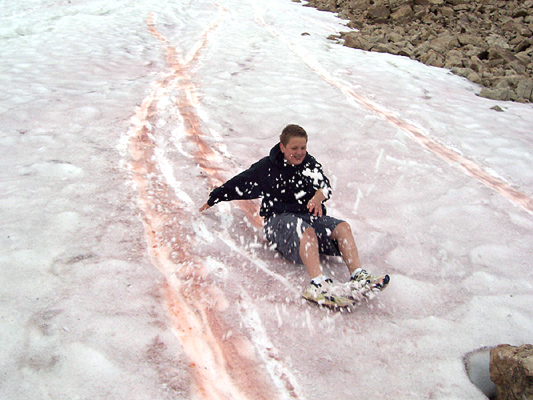
During this time of year, when snow is covering these organisms, they are actually capable of going dormant to withstand the extreme cold. Only when the process of melting begins do we begin to see the colors attributed to the snow algaes. Extra nutrients, warmth and access to water allows them to come out of this dormant stage. The algae use flagella, whip like tails, to propel themselves closer to the surface of the snow through melting water. It is most common to see them when snow is compressed, look for red footprints in the snow! Watermelon snow can actually appear as various colors, including purple, green and orange.
There are no health concerns to be associated with coming into contact with watermelon snow, though it is recommended to avoid consuming the algae as it can cause gastrointestinal discomfort. Interestingly, watermelon snow could pose a role as a climate indicator. The appearance of the algae indicates melting, but it also leads to a darker surface on snow and glaciers, leading to additional melting. This feedback loop will increase algal numbers, in turn increasing melting once more. According to National Geographic, 17% of the snow melting worldwide is melting due to the direct relationship with the algae. As we continue to account for changes in climate, watermelon snow could be an important factor for calculating just how fast we are losing our year-round snow fields and glaciers. Studies are even arguing that we should begin accounting for the algae when creating climate models related to snowy climates.
These algae are fully dormant now, but next summer, when you’re up around our high alpine lakes in the SNRA, keep an eye out for these cool, colorful organisms. And remember… don’t eat the watermelon snow!
Bailey Cole was a 2025 Naturalist for SIHA. During the summer, when she wasn’t working at the Redfish Visitor’s Center, she enjoyed long hikes to alpine lakes and exploring hot springs in the Sawtooth National Recreation Area.