
Wildfires have been shaping the west for longer than almost any other force, and the SNRA is no exception. Many people come to love the SNRA for its lush coniferous forests and high alpine lakes, along with the rugged mountain peaks. But sometimes you have to wonder, how have these forests survived centuries of wildfire? Today, we’ll be discussing tree adaptations to survive in areas with frequent wildfires and how those same fires can be beneficial for the forests.
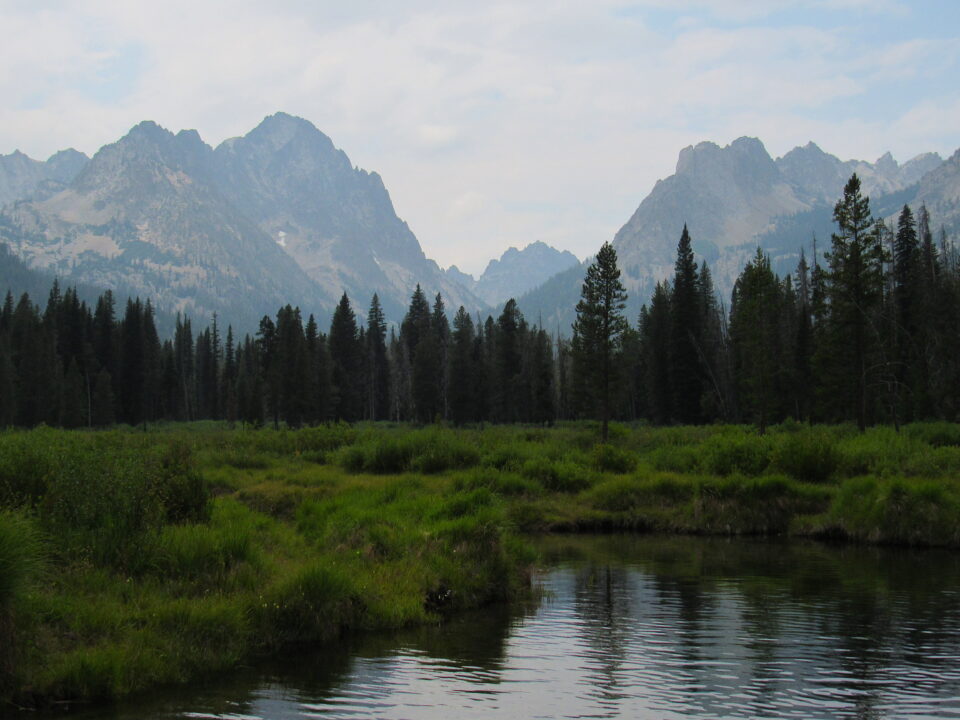
Photo credit: Edge of the Wilderness by Noelle Halverson, SIHA archives.
There are a lot of different trees with different adaptations for their surroundings, including fire, so today we’re going to be focussing on some of the common trees in the Sawtooth region. Many of these trees have similar adaptations for fire because they need to survive the same fires and challenges.
One of the most commonly known adaptations for fire survival that coniferous trees have are serotinous cones. But what is a serotinous cone and why is it important? Coniferous trees use pinecones to develop and distribute their seeds, a common example of this in the SNRA is lodgepole pine. These cones are filled with tree sap or resin that hardens and seals the cone to protect the seeds inside. Now, this doesn’t directly protect the tree. It does, however, help guarantee that new trees will grow. The resin sealing the cones is heat resistant and requires temperatures between 113-140 degrees fahrenheit to melt and open the cone and is also a fairly slow process. This ensures that when one of the trees burns in a fire, the cones open and release healthy seeds after the fire has passed and ensure that the forest is able to regrow.
Another common adaptation seen in trees that are frequently exposed to fires is extra thick bark. Tree species that have been exposed to fire have often adapted thicker bark that help to protect the soft inner wood and sap layers within the tree. Unlike serotinous cones that help seeds survive, this adaptation does focus on helping the tree itself survive fires directly. The thick bark insulates the tree against the heat of the fire. The bark might char and crack, but this often allows the inner heartwood of the tree to survive and allows the tree to keep growing after the fire. One well known example of this is the Ponderosa Pine. These trees are more common at lower elevations, around the Boise area, and are adapted to small but frequent forest fires. A mature ponderosa pine can have bark that is up to 6 inches thick completely around the tree. To protect the tree, this bark is devoid of sap so that it’s much harder to catch on fire. Fun fact the sap and bark of ponderosa pines has been described as having a vanilla or butterscotch scent that can even be smelled just walking through a grove in hot weather.
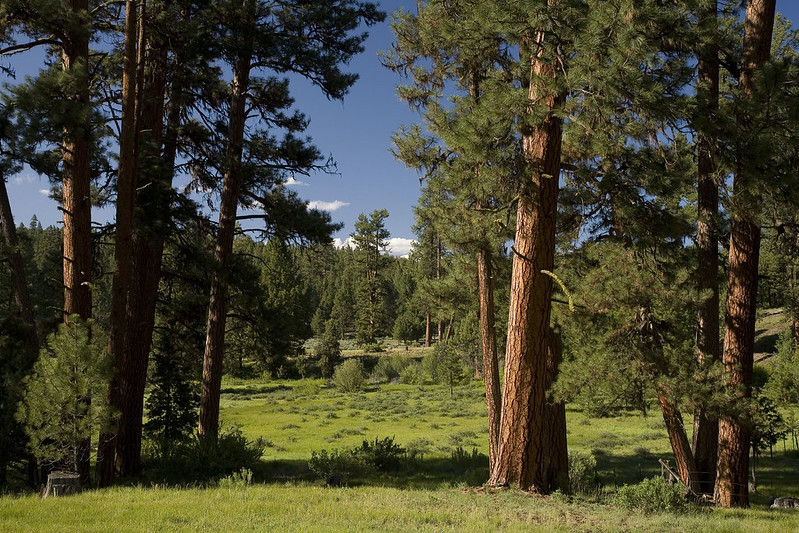
Forest fires are a fairly common event, and because of this, trees have adapted in these and similar ways, to the point that several tree species and forests actually benefit from fire. Fires help to refresh and restore nutrients into many ecosystems, as well as control pests and disease. Unlike how many modern forest fires spread rapidly and burn at intense temperatures, historic forest fires would be fairly frequent but much less severe. Because of this the fires would spread a lot less and would burn mostly old growth or already dead trees, without spreading much into new growth areas.
Because of how this cycle works and which trees burn most often, the overall health of the forest was usually improved by fires. These fires return nutrients from dead and sick trees back into the soil, prevent the spread of disease and pests like pine beetles, and clear out areas for new plant growth.
Next time you hear about a small wildfire, be safe, and keep in mind how the forest will change next time you see it. What old trees might be replaced with new growth, which might still be standing, and how the forest reacts as a whole.
References:
https://www.fws.gov/story/2024-05/know-your-trees-ponderosa-pine
Luke is a 2026 naturalist at SIHA. When not working at the visitor center, you can often find him out hiking, fishing, reading, or simply enjoying one of the many great views of the SNRA.