November brings a change to our daily routines: the clocks “fall back” one hour for the end of Daylight Saving Time. For most of us, this means an extra hour of sleep and a little more daylight in the morning. For wildlife, however, nothing has changed. Their daily rhythms continue to be governed by natural cues. Their activity patterns are not tied to the time displayed on our clocks. This small difference between human schedules and wildlife behavior can have some serious consequences on the road.
Some animals are most active during the day, which makes them diurnal, while others are primarily active at night, or nocturnal. Some animals fall somewhere in between, which we call crepuscular. These animals are most active during the twilight periods around dawn and dusk. There are several advantages to being active during these transition periods. The dim light of dawn and dusk can make it more difficult for some predators to detect their prey, while cooler temperatures can make movement and foraging more efficient. There may also be less competition for food than there is during the middle of the day. In the Sawtooths, some of our most familiar crepuscular animals are mule deer and elk. Snowshoe hares, badgers, coyotes, and foxes also tend to be active around these twilight hours.
The timing of these activity patterns is influenced by environmental cues such as sunrise, sunset, season, and the amount of daylight available. Humans, on the other hand, organize much of our daily activity around an artificial schedule. This creates an interesting problem when our schedules change but the natural cues that guide wildlife activity do not.
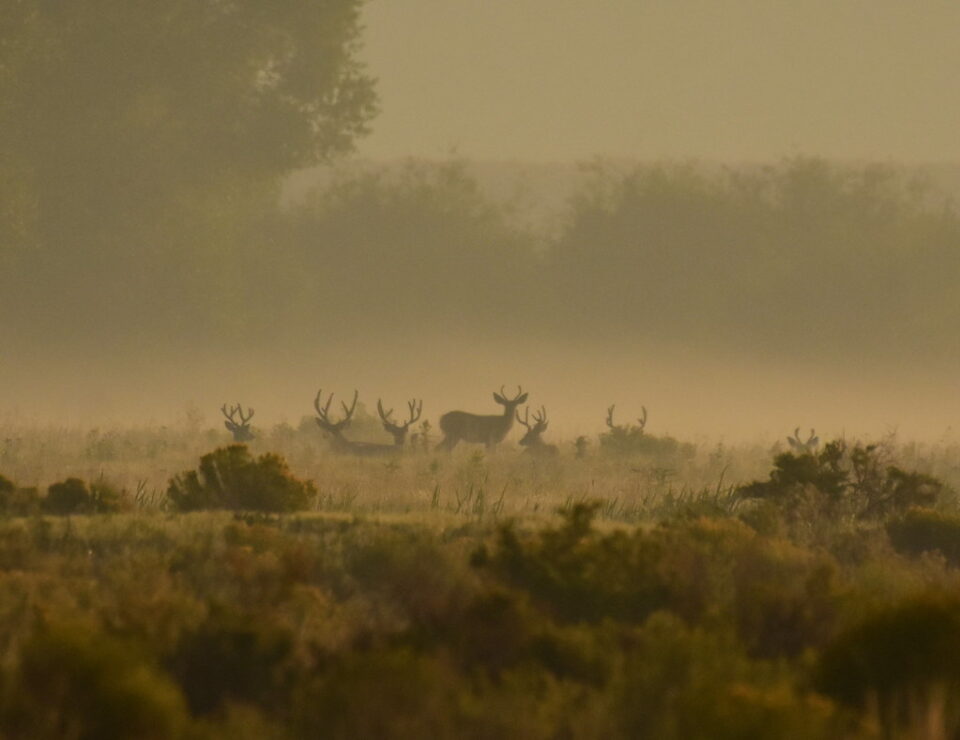
“Mule deer at Seedskadee National Wildlife Refuge” by USFWS Mountain Prairie is marked with Public Domain Mark 1.0.
When we move our clocks forward in the spring, daylight shifts later into the evening. When we move them back in the fall, daylight shifts toward the morning. The November time change therefore moves the evening commute closer to sunset, increasing the potential overlap between peak traffic and the period when many crepuscular animals are becoming active. This overlap is particularly important because wildlife-vehicle collisions occur when wildlife movement and vehicle traffic coincide.
Researchers have been investigating this relationship for years. A 2021 study examined more than 35,000 white-tailed deer-vehicle collisions in New York and found that collisions increased following the autumn Daylight Saving Time change. The increase was particularly noticeable on workdays, when commuter traffic is highest (Abeyrathna & Langen, 2021). Another study published in 2022 analyzed more than one million deer-vehicle collisions and found that collisions were substantially more common during the hours following sunset. The researchers estimated that deer-vehicle collisions increased by 16% during the week following the autumn clock change (Cunningham, 2022). The timing of traffic appears to be a likely cause of the collisions.
Before the autumn transition, the evening commute occurs earlier relative to sunset, leaving less overlap between peak traffic and the period when deer are becoming active. After the clocks shift, the same human schedule occurs closer to dusk, when wildlife movement is naturally increasing. The effect of a clock change depends on when wildlife are moving, when people are driving, and how those patterns overlap.
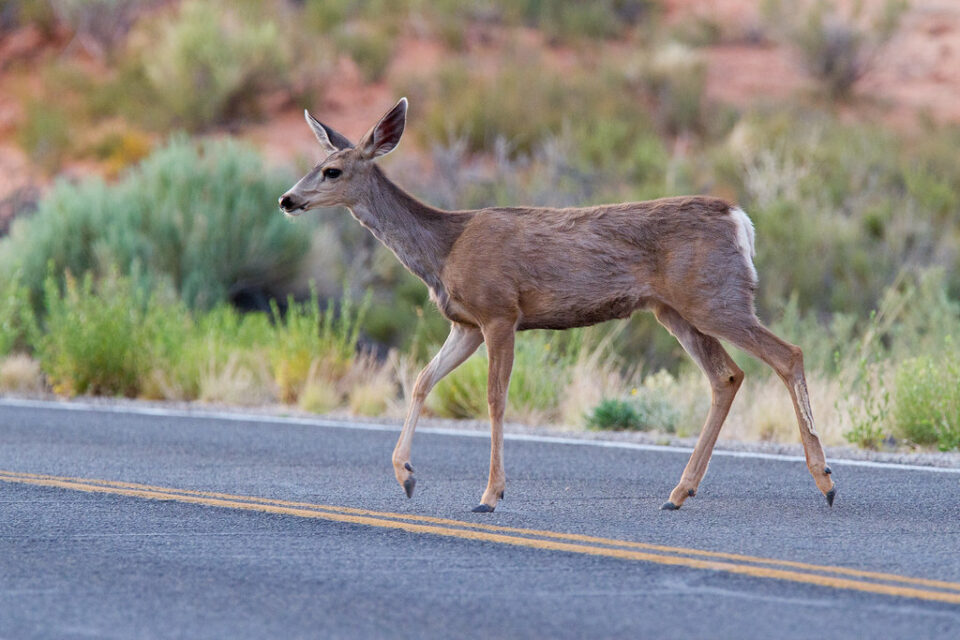
“Mule Deer” by ArchesNPS is marked with Public Domain Mark 1.0.
Drivers are an important part of the equation, too. The transition to a new schedule can temporarily disrupt sleep patterns and alertness, while dawn and dusk hours already present lower visibility. Fog, precipitation, snow, and rapidly changing light can make it more difficult to detect an animal near the road or react when one enters the highway. This is especially relevant in November, as the month brings shorter days and increasingly dark evening commutes. The animals are still moving according to the same environmental cues, but more of us are now traveling through their active hours.
Asking wildlife to change its schedule is not an option. Fortunately, drivers have more control over their own schedules. As we adjust to the time change, there are a few simple ways we can reduce the risk of wildlife-vehicle collisions. Slow down around dawn and dusk, giving yourself more time to identify and react to animals near the road. Scan the roadsides, not just the pavement, and watch for movement, eyeshine, and silhouettes along the edges of the road. Be particularly cautious in areas with known wildlife activity. If you see one animal, keep watching because others may be nearby. Most importantly, give wildlife plenty of space. If an animal is near or on the road, slow down and be prepared for it to change direction unexpectedly.
The time change is a good reminder that our schedules are not necessarily synchronized with the rest of the landscape. A clock can tell us when to leave work or when to start our drive home, but it does not determine when wildlife are going to cross the road. As the days get shorter, paying attention to that difference can help us share the road a little more safely with the animals that live here.
Works Cited:
Abeyrathna, W. A. N. U., and Tom A. Langen. “Effect of Daylight Saving Time Clock Shifts on White-Tailed Deer-Vehicle Collision Rates.” Journal of Environmental Management, vol. 292, Elsevier BV, Aug. 2021, p. 112774, https://doi.org/10.1016/j.jenvman.2021.112774.
Cunningham, Calum X., et al. “Permanent Daylight Saving Time Would Reduce Deer-Vehicle Collisions.” Current Biology, vol. 32, no. 22, Nov. 2022, https://doi.org/10.1016/j.cub.2022.10.007.
Addie is a 2026 Naturalist who has been visiting the Sawtooths since childhood, so she may be a bit biased when she says it’s the most beautiful place in the world. When she’s not working, she loves to hike and explore the area as much as possible.