
Within my first week of moving into the SIHA bunkhouse in Obsidian, I developed an odd fascination with Columbian ground squirrels. Every morning before heading to work, a crew member would inevitably glance out the kitchen window while eating breakfast and yelp out, “Ground squirrel!”
It didn’t take long before it became a tradition. My first priority in the morning is making sure I spot at least one ground squirrel scampering around outside. Somewhere along the way, I convinced myself that seeing one meant we were destined to have a good day.
The funny thing is, it has seemed to hold true just often enough that none of us have questioned it. Whenever something inconvenient happens, we jokingly blame it on not seeing a ground squirrel that morning. They have somehow become our unofficial good luck charms. Now we’re nearly halfway through the summer, and despite spending every day surrounded by soaring peaks, deep forests, and amazing wildlife, I still find myself checking that same kitchen window each morning before anything else.
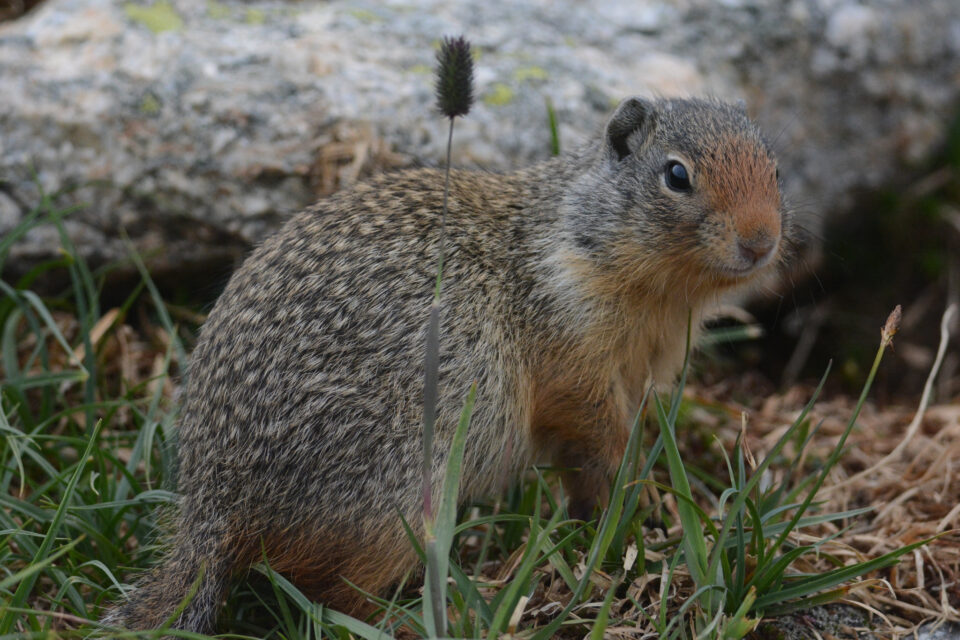
The Columbian ground squirrel is the largest species of ground squirrel in North America. Photo Credit: “columbian ground squirrel” by Braden J. Judson is marked with CC0 1.0.
The Columbian ground squirrel (Urocitellus columbianus) is the largest species of ground squirrel in North America. Their scientific name is fitting: Urocitellus comes from Greek and Latin words meaning “little squirrel with a tail,” while columbianus refers to the Columbia River Basin where European naturalists first described the species. Around the Sawtooths, they’re easy to recognize by their rusty-orange face and chest, tan speckled backs, short gray tails, and their classic upright “sentry” pose as they scan for danger.
They live throughout Idaho, digging elaborate burrow systems beneath mountain meadows, forests, and sagebrush hillsides. Their underground homes aren’t simple tunnels, either. Different chambers serve different purposes, including nesting, raising young, storing food, and eventually hibernating. Mothers even disguise the entrances to their nursery burrows with grass and loose soil to keep predators from discovering their kits.
Columbian ground squirrels are only active for about three or four months each year. During that brief window, they have to emerge from hibernation, find a mate, raise their young, and eat enough to survive the next eight or nine months underground. That means they spend nearly 70% of their lives asleep!
As summer progresses, they enter a stage called hyperphagia, where they get an overwhelming biological urge to eat as much as possible. Surprisingly enough, these squirrels are actually omnivores and will eat grasses, wildflowers, roots, seeds, bulbs, insects, and the occasional mouse or carrion if the opportunity presents itself. Adult squirrels can gain 300 to 400 grams in just a few weeks, building the fat reserves they will live off of all winter long.
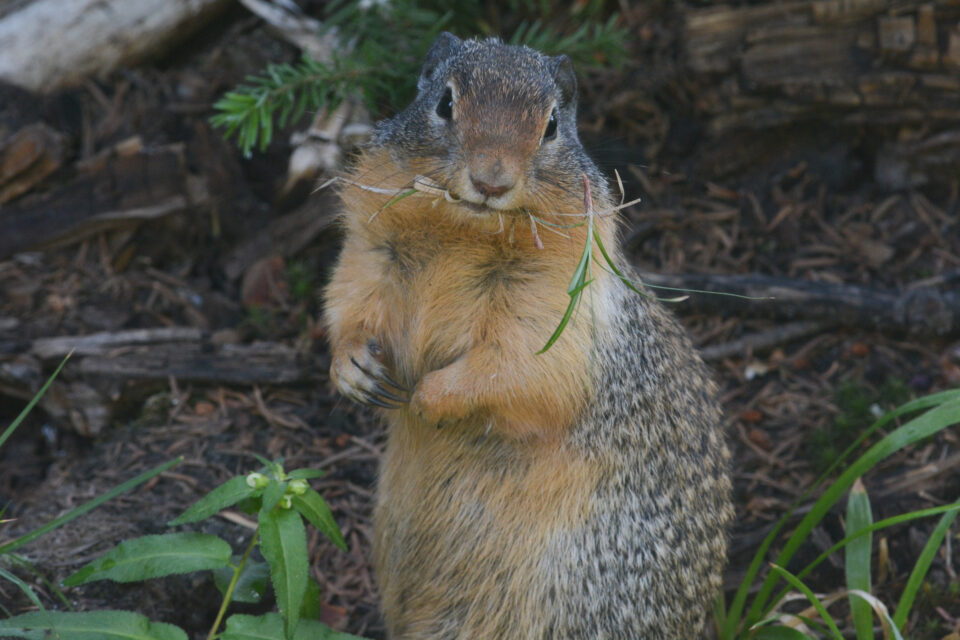
During the short summer season, Columbian ground squirrels spend much of their day foraging for food. Photo Credit: “columbian ground squirrel” by Braden J. Judson is marked with CC0 1.0.
Adult males are the first to disappear, sometimes as early as late July. Instead of going straight into hibernation, they often enter estivation first, which is a type of summer dormancy brought on by hot and dry conditions. Once temperatures increase and vegetation begins drying out, staying underground becomes more efficient than continuing to search for food while carrying around all that extra weight.
From estivation, adult males transition directly into winter hibernation. At this point, females and juvenile squirrels will join them. Both females and juveniles go into dormancy later because they have to wean their kits before they begin gaining those winter pounds (or in this case, grams). Once they enter hibernation, their body temperature plummets, their heart rate and metabolism slow dramatically, and they won’t eat or drink again until the following spring. Adult males are also the first to wake up, emerging weeks before females so they can establish territories before the breeding season begins.
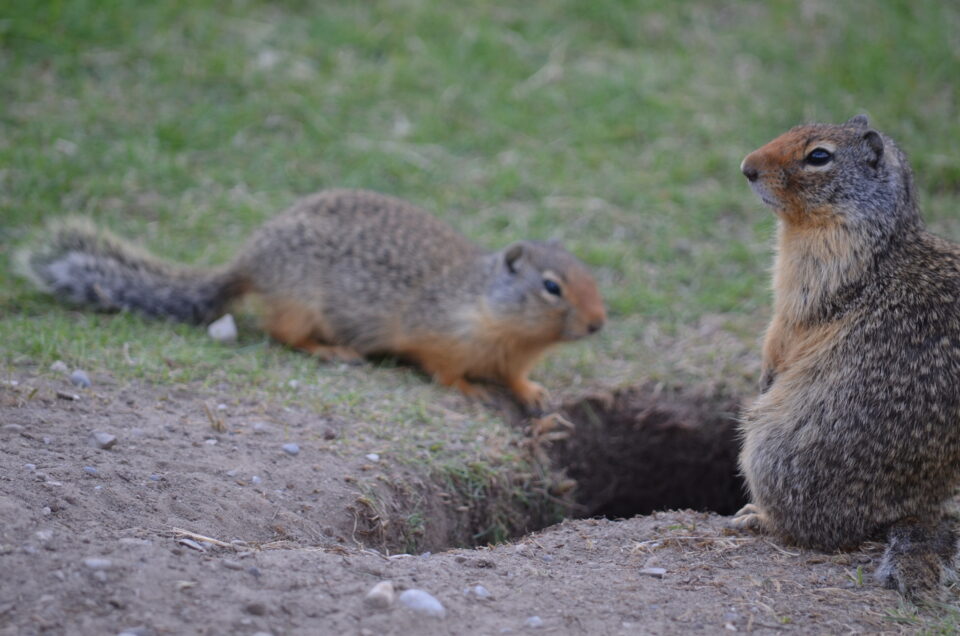
Columbian ground squirrels are considered moderately social, living together in colonies. Photo Credit: “columbian ground squirrel” by Liam Steele is marked with CC0 1.0.
They also play a major role in ecosystems, more than people realize. Every chirp of alarm across a meadow represents an important meal for something else. Badgers, coyotes, hawks, eagles, long-tailed weasels, and other native predators all depend on Columbian ground squirrels as a food source. Their constant digging aerates the soil, helping water and oxygen reach plant roots. Their abandoned burrows can also become homes for amphibians, reptiles, insects, and other small animals.
So if you’re visiting the Sawtooths within the next few weeks, keep an eye out. Look for a small squirrel standing perfectly upright in a mountain meadow, giving a sharp alarm before disappearing into a burrow. Watch for two familiar squirrels touching noses in what remarkably looks like a tiny kiss, or a kit chasing a sibling through the tall grass. But don’t wait too long. Within just a few weeks, many of them will have already headed underground, beginning a months-long sleep while the rest of us are still enjoying summer.
As for me, I’m going to have to find a new animal to forecast my days. Until then, I’ll keep checking that kitchen window every morning, hoping at least one of my good luck charms hasn’t disappeared just yet.
Addie is a 2026 Naturalist who has been visiting the Sawtooths since childhood, so she may be a bit biased when she says it’s the most beautiful place in the world. When she’s not working, she loves to hike and explore the area as much as possible.