
What do you think of when you think of the moon at night? Some might say moths, and others might think of werewolves. If you guessed werewolves, you’re actually closer than you might think—today we’re talking about wolves in the Sawtooth National Recreation Area (SNRA)!
It’s a common misconception that wolves will howl at the moon. If you’ve ever heard a wolf howl, they aren’t actually singing to the moon, however romantic that notion is. Instead, they are communicating. Imagine trying to tell your family you found food miles away with no cell phone. Wolves lifting their heads to make the low, long howls is exactly how they stay in touch!
So today I’m presenting a Q&A of the most frequent questions (and misconceptions) that people have about wolves!
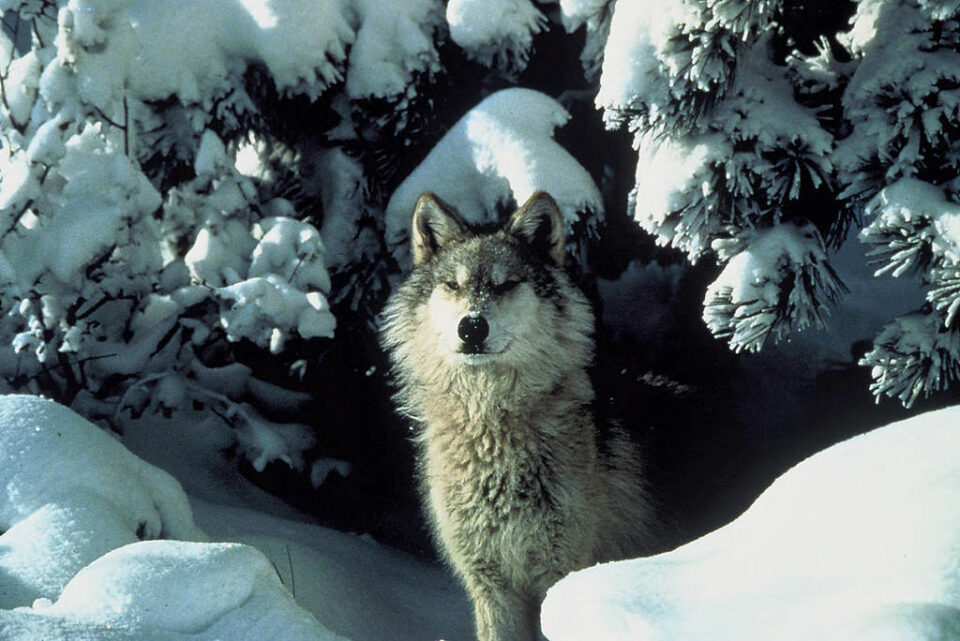
“Gray wolf” by USFWS Headquarters is marked with Public Domain Mark 1.0.
Q: Are there any wolves in my campgrounds in the Sawtooths?
A: Wolves do live in Sawtooth NRA, but they don’t like people or being near us. So seeing a wolf near a developed area would be extremely rare.
Q: Have wolves always been here; I thought we had to bring them here?
A: You’re on the right track. Wolves once occupied most of North America, including the SNRA. Then, from the late 1800s into the early 1900s, people killed wolves en masse. People were afraid of wolves and were worried about wolves eating their livestock and by the end of the 1930s, wolves were extirpated from the area—meaning they became locally extinct. Scientists later learned that removing large predators can disrupt the ecosystem and wolves were reintroduced to central Idaho in the late 1900s.
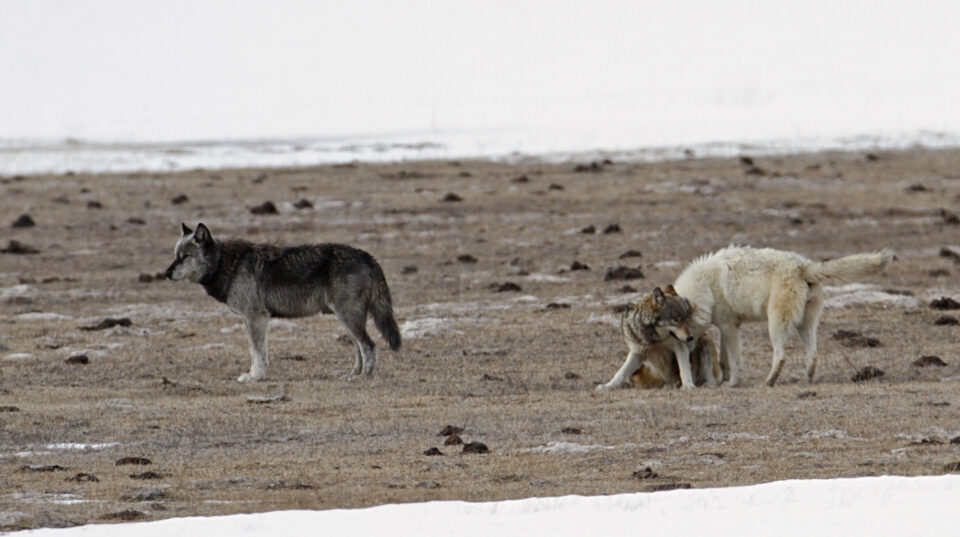
“Canyon Pack wolves” by YellowstoneNPS is marked with Public Domain Mark 1.0.
Q: Can I see a wolf while I’m on vacation? What if I hike really far?
A: Wolves have fantastic senses, and they don’t really like humans. So the chance that you or I could go on a hike and see one is extremely rare.
Q: How big is a wolf pack?
A: Pack size often depends on how much food, or prey, is available. It’s like how you might invite friends to a party based on how many pizzas you want to purchase. Wolves who hunt bison historically, and now, in Yellowstone have packs that could be in the 20s or 30s in number. However, more commonly, wolf packs are between 5 and 15 individuals.
Q: How many of the wolves in the SNRA are lone wolves?
A: The term lone wolf is popular in modern lingo, but it doesn’t apply to wolves as much as we might think. At maturity some males and females may set out to find a mate and start a new pack.
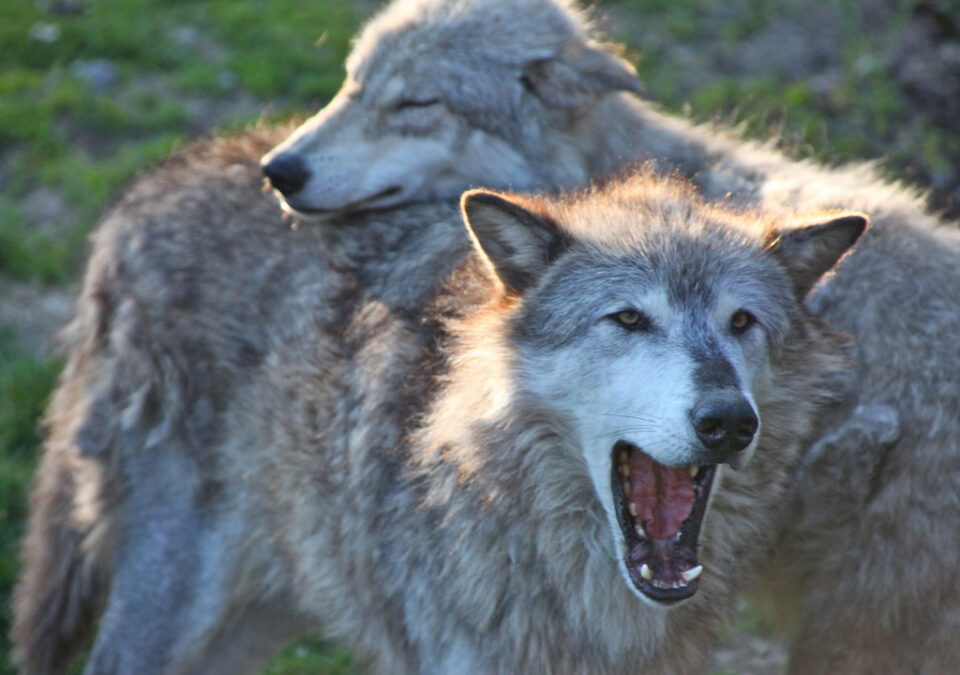
“Gray wolf” by USFWS Headquarters is marked with Public Domain Mark 1.0.
Q: How long do wolves live?
A: In the wild, the oldest wolves live up to about 13 years. Typically, they’ll live around 7 years, and in captivity, they can live up to 20 years.
Q: How does a wolf become an alpha?
A: The terms alpha and omega came from one captive study with adults of the same age from different packs. Being unfamiliar with each other, the wolves demonstrated dominance behaviors and aggressive reactions. That old study has been debunked many times over, but the terminology persists.
In the wild, packs are more like an extended family unit. There are relatives of different ages – parents, offspring, and sometimes siblings to the parents. The breeding pair is the lead pair in that pack during their breeding lifespan. All a wolf must do to become a lead female or male is to find a suitable mate and start raising young!
Q: So wolf packs are like families?
A: Yes! Wolves packs are similar to extended families. The parents are the lead pair, and remain the lead pair until they die or are unable to remain the lead pair. In smaller packs, it may be just the parents and their pups. In larger packs, there can be multiple breeding pairs and multiple wolves assisting with raising the pups.
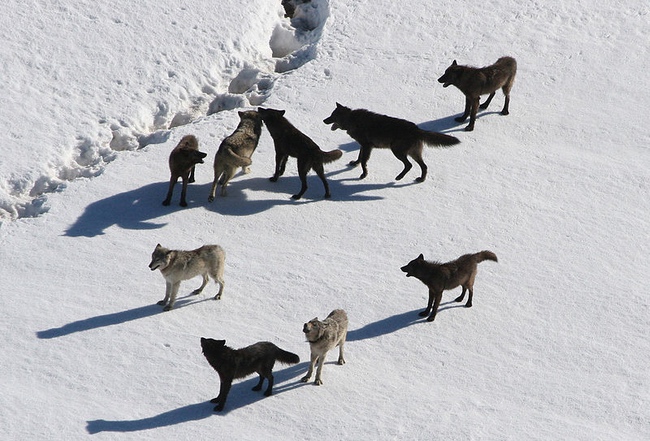
“The Gibbon Wolf Pack in Yellowstone Park. Photo: Doug Smith.” by kristen 7 is marked with Public Domain Mark 1.0.
Q: What do wolves typically eat?
A: Wolves are opportunistic hunters. They will hunt anything from snowshoe hares to deer and elk. Because hunting is a learned behaviour, wolves generally hunt the food they were exposed to when young, though they can learn to eat different food sources with exposure.
Q: How big are wolves?
A: Adult wolves weigh around 70-100 pounds, but some can weigh as much as 180 pounds! From tip to tail, adults typically measure 4 to 7 feet long.
And bonus fact: wolves can sustain a pace of 35 miles per hour for upwards of 15 minutes, but typically hunt and move over long distances at a nice pace of 5mph.
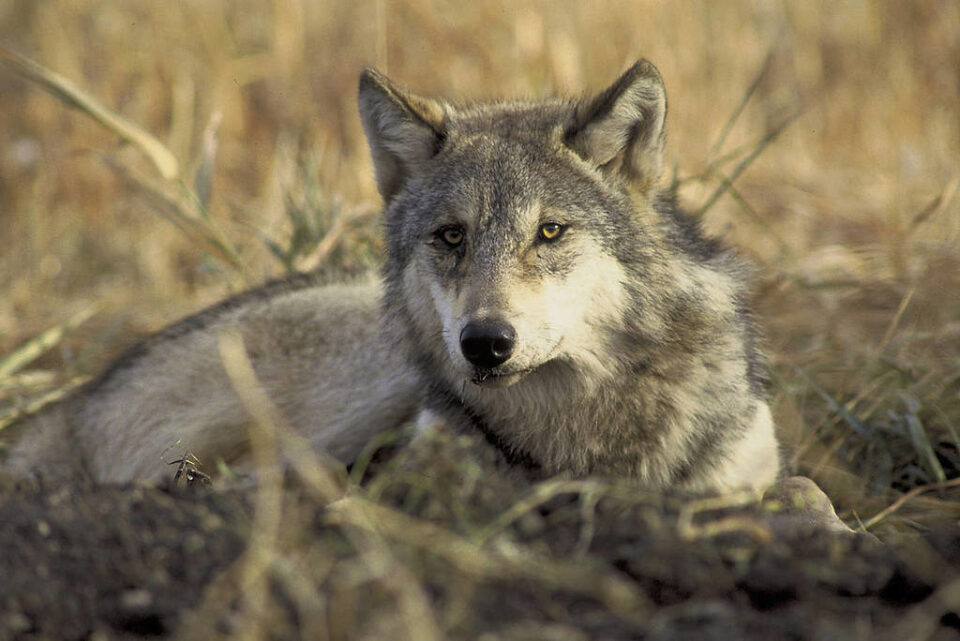
“Gray wolf” by USFWS Headquarters is marked with Public Domain Mark 1.0.
I hope this Q&A helps clear up some common misconceptions and shows why wolves are such an important part of a healthy ecosystem. They’re wild animals that deserve both our respect and our understanding.
Miriam Black is an avid artist and biologist working as a naturalist for the Sawtooth Interpretive & Historical Association. When not snapping photos of the people and places she loves, she spends her time with family and reading.